Hope Street · Georgian Quarter
Liverpool Philharmonic Hall
This corner of Hope Street was once the home of William Hope (1751–1827), the merchant the street is named after. The first Philharmonic Hall opened here on 27 August 1849 and was destroyed by fire on 5 July 1933; Herbert J. Rowse's Art Deco hall replaced it in 1939.
- Architect
- Herbert J. Rowse
- Opened
- 19 June 1939
- Heritage
- Grade II* listed
- Capacity
- About 1,700 (main hall)
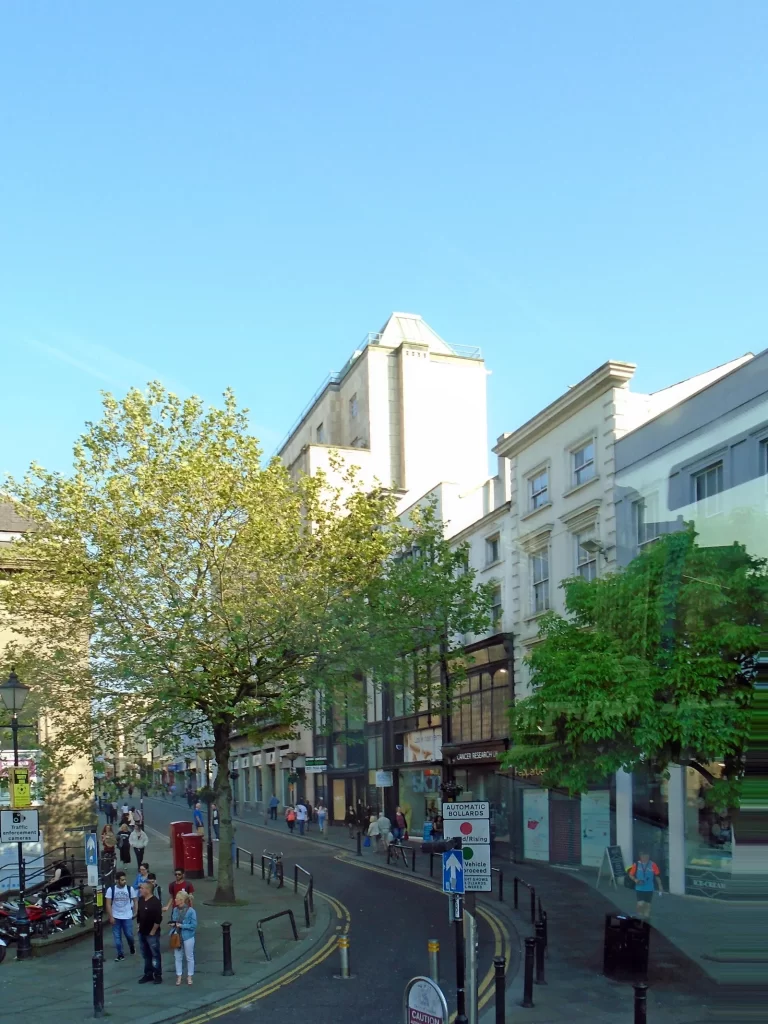
Hope Street takes its name from William Hope, a Liverpool merchant whose house stood on the ground now occupied by the Philharmonic Hall. The street was straightened in the 1790s and houses began to go up along it around 1800.
The Liverpool Philharmonic Society opened its first hall on the site on 27 August 1849 with a week-long festival. Built for an audience of about 2,100 and an orchestra of 250, with boxes along the sides and an organ behind the platform, it was admired for its acoustics.
On the evening of 5 July 1933 fire broke out in the roof. More than 100 firemen attended and some 10,000 people watched from the surrounding streets; the hall and its new organ were damaged beyond repair, and demolition began the next day.
The present hall, designed by Herbert J. Rowse, opened on 19 June 1939. It is Grade II* listed and remains the home of the Royal Liverpool Philharmonic. The Music Room, a smaller space for chamber and lunchtime concerts, opened in 2015.
- 1790s
Hope Street is straightened and houses follow from about 1800. The street is named after the merchant William Hope, whose house stood on this site.
- 1849
The first Philharmonic Hall opens on 27 August with a week-long festival.
- 1933
Fire destroys the hall on the evening of 5 July.
- 1939
Herbert J. Rowse's Art Deco hall opens on 19 June.
- 2015
The Music Room opens on 9 October.
How much history this place holds
The Old Town Time Meter
Old Town Time Meter
76/100
Landmark
- Time on this spot236 years, since 1790 (Hope Street laid out; William Hope's house)31/40
- Age of the present building87 years, built 19399/20
- Layers of history5 documented chapters15/15
- Heritage protectionGrade II* listed11/15
- Continuity177 years in the same use (concerts on this site)10/10
Part of the historic district of Georgian Quarter · district meter 77/100, Landmark
An index of the documented time and history held by this place, part of Old Town Liverpool's Quantum Energy Mapping. How it is measured.
Old Town Liverpool guides
With the story behind the building
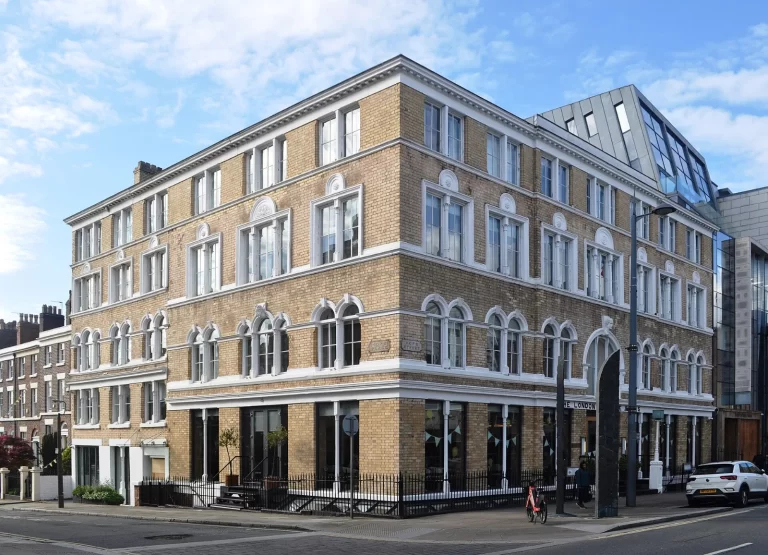 The London Carriage Works at Hope Street HotelThe London Carriage Works (Hope Street Hotel) · built 1860
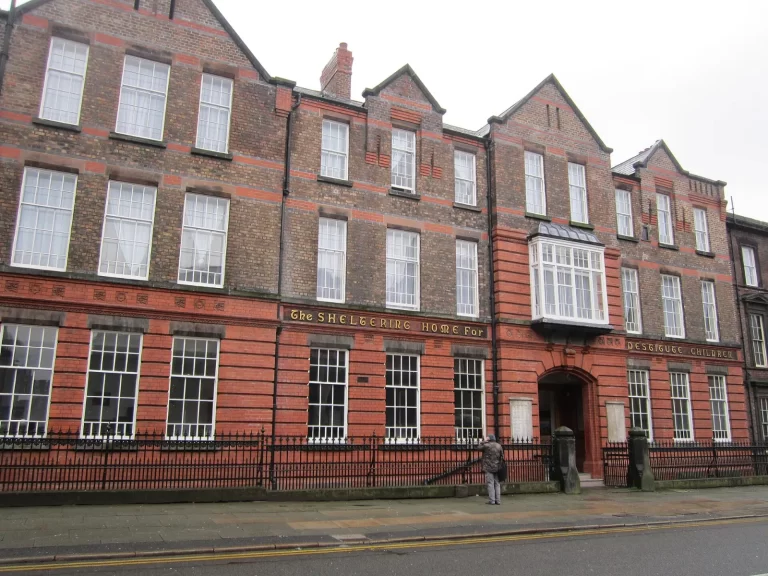 The Art School RestaurantFormer Liverpool Sheltering Home, 1 Sugnall Street and 2A Myrtle Street · built c.1840 and 1888–89 (Victorian) · Grade II listed · NHLE 1393709
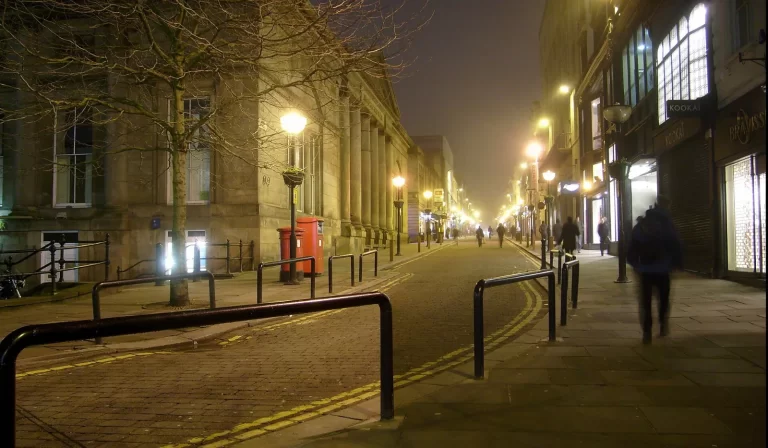 The Italian Club Fish128 Bold Street
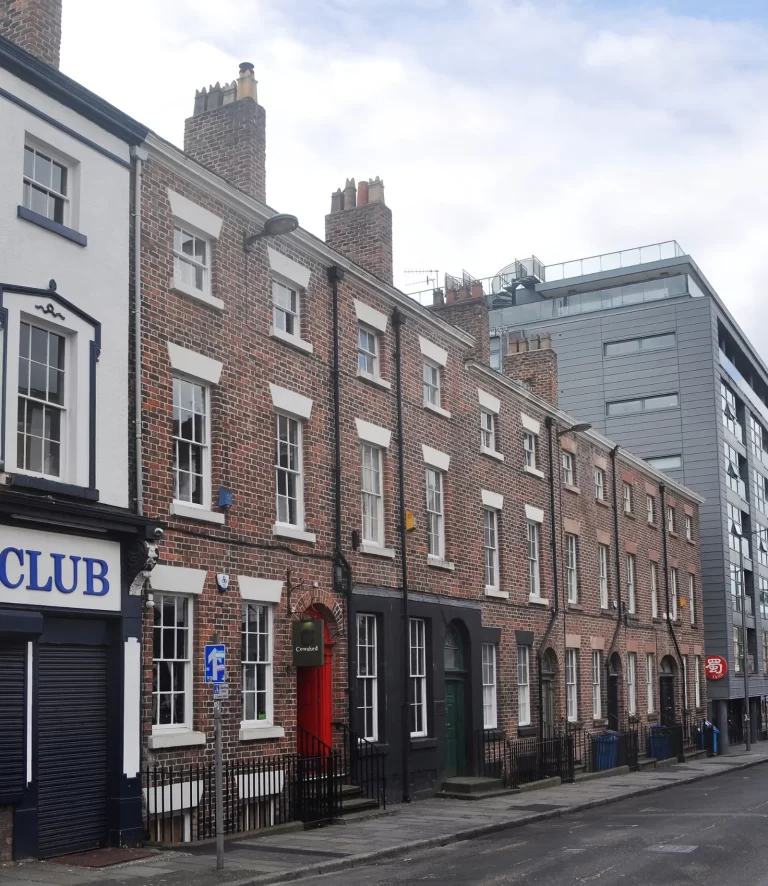 Cowshed
 Maray
 The Italian Club85 Bold Street
Make an evening of it
What's on nearby
Things to do
Tours that start nearby
- Bus tours · Sightseeing from £15 per adult City Explorer Hop-On Hop-Off Bus Tour City Explorer Liverpool (Maghull Coaches) Times, prices & meeting point
- Beatles · Bus tours from £20 per adult Beatles Explorer Bus Tour City Explorer Liverpool (Maghull Coaches) Times, prices & meeting point
- Attractions · Museums World Museum National Museums Liverpool Times, prices & meeting point
Around Liverpool Philharmonic Hall
Sources: Wikipedia: Liverpool Philharmonic Hall; Wikipedia: Hope Street, Liverpool; Food Standards Agency food hygiene rating data (Open Government Licence v3.0), updated 16 October 2026.